Booking form
Each service can have its own booking form. Use it to collect the details needed to manage that specific appointment.
For a simple service, name and email may be enough. For a more complex service, you might add phone number, address, notes, file uploads, or service-specific questions.
Build the form
Open the service and use the form builder to add, reorder, and configure fields.
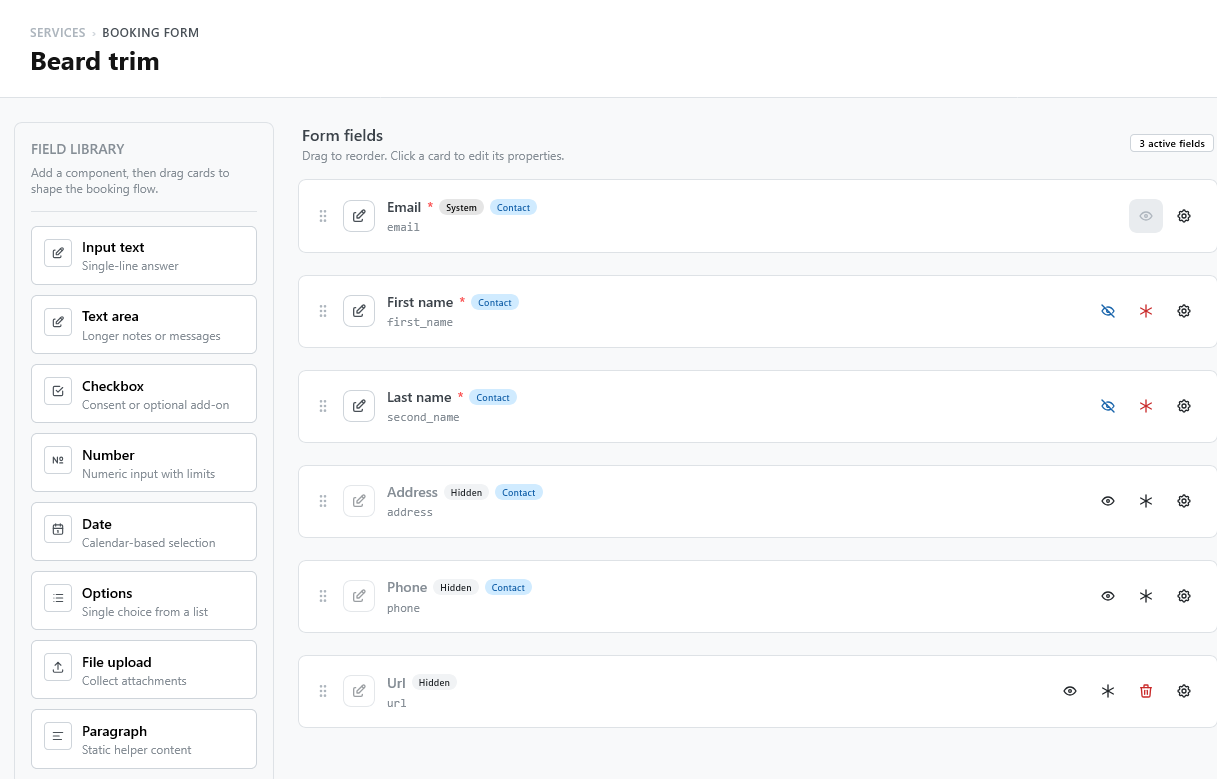
Fields can be:
- required or optional;
- shown only in certain conditions;
- validated according to the field type;
- included in notification emails through placeholders.
Keep the form focused
Ask only for information you will actually use. A shorter form is easier for customers to complete and reduces the amount of personal data stored in WordPress.
Good examples:
- phone number for last-minute contact;
- address for an on-site visit;
- notes for accessibility or preparation needs;
- file upload when the provider must review a document before the appointment.
Customer identity
Make sure the form captures the customer identity required by your workflow, especially name and email. Phone behavior follows the installation-wide phone settings.
Translations and notifications
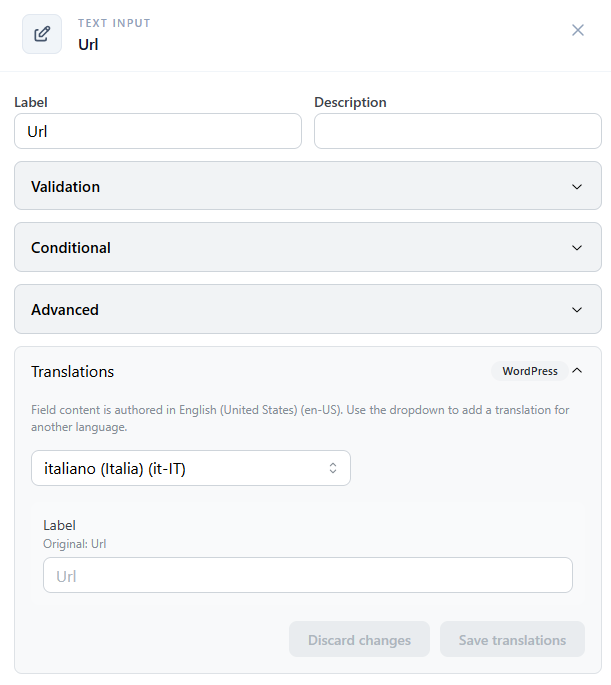
When translations are enabled, field labels and options can be translated from the internal translation panels.
If a field should appear in an email, configure its notification placeholder in the field settings and insert that placeholder in the template.
Privacy
Booking-form answers are part of customer data exports and privacy actions. Avoid collecting sensitive information unless it is necessary for the service.