Time slots
Time-slot settings decide how availability windows become appointment times customers can book.
Duration
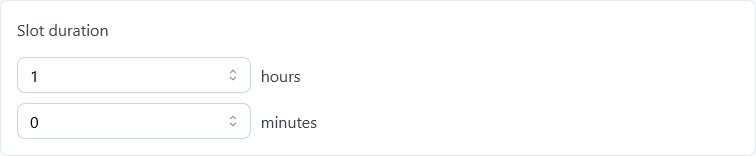
Duration is the length of one appointment for this service.
For example, a four-hour availability window can produce four one-hour appointments when the service duration is one hour.
Duration belongs to the service. Providers do not have separate duration values in TheBooking 4.
Capacity
Capacity is how many units can be booked for the same appointment time.
Units can represent seats, tickets, participants, or resources. A one-to-one consultation usually has capacity 1; a class or group appointment may have a higher capacity.
Use the per-customer limit to restrict how many units one reservation can request. Use Block after one reservation when the first booking should close the time even if unused capacity remains.

Buffer
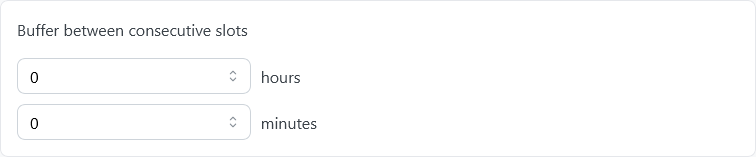
Buffer time creates space before or after appointments. Use it for preparation, travel, cleanup, or administrative work.
The service offers two buffer behaviors:
- Always computed between slots: keeps a stable list of possible times.
- Only computed around booked slots: keeps more flexibility until a reservation is made.
Lead times
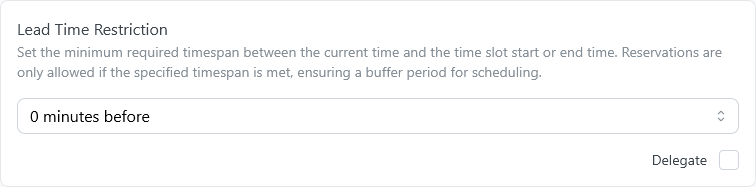
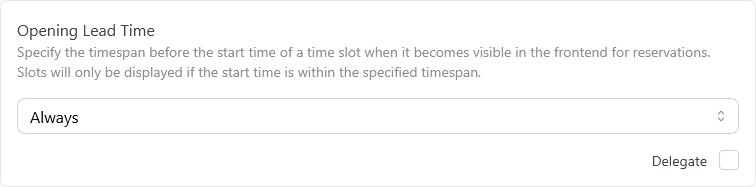
Lead times control when customers may book.
- Opening lead time decides how far in advance a slot becomes visible.
- Closing lead time decides how close to the appointment customers may still book.
Frontend settings decide whether blocked times are hidden or shown as unavailable.

Multiple plans
Plans for the same service and provider normally share the same service capacity. Mark a plan as independent only when that plan should have its own capacity, such as a separate room or ticket allocation.
The same provider still cannot handle overlapping appointments in two places at once.